I’ve used a preaching calendar for as long as I can remember. Even now that I’m not pastoring a local church, I still keep a yearly preaching calendar with dates, sermon titles, and key details for every place I’m speaking as a guest throughout the year.
At Sunday Ready, we work with multiple pastors every week. While we still work on most of the sermons the week of, we’ve planned in advance and already have the series laid out, the big ideas in place, and the resources we need to write something better and quicker.
To help you do the same, I’ve put together a free preaching calendar you can download here. It will help you get organized and think strategically about a full year’s worth of sermons.
If you’d like to go a step further, you can grab the premium preaching calendar for $29. It’s the exact calendar we use with our Sunday Ready pastors, with added tools and structure to make long-term planning even easier.
3 Reasons to Use a Preaching Calendar
I’ve never met a pastor who didn’t want to feel less stressed and more prepared. Sadly, most of us end up juggling emergencies and responsibilities out of sheer necessity, and sermon preparation is the thing that gets pushed to the side. Before you know it, you’re preaching the best sermon you could come up with in the final 48 hours.
Here’s the thing, creativity doesn’t show up when you’re overwhelmed. Great ideas come in the margins (I wrote about where to find, collect, and retrieve great sermon ideas in this article). Yes, procrastination can sometimes spark a creative adrenaline rush, and God has a way of making our Saturday-night sermons work, but living that way long-term is harmful to your body, and it will keep you from tapping into your full creative depth as a preacher.
That’s why I encourage every pastor to use an annual preaching calendar. I could give you 10 reasons why, but for the sake of time, let me give you the 3 biggest benefits.
1. A preaching calendar helps you be strategic and creative
A strategic approach to a year’s worth of sermons is good for you, your family, and your church.
Eugene Peterson tells a story about the time his son, Leif, told him he really only preached one sermon. At first, Eugene was defensive; he didn’t think he repeated himself. But finally, he understood what Leif meant. He called it a pastor’s signature sermon. It’s the topic or core message that always seems to come up, no matter what your sermon topic is.
Every pastor has one. We all drift toward our favorite themes and personal soapboxes. No matter what the sermon should be about, we eventually circle back to our greatest hits. (Mine was always spiritual disciplines.) That’s why a preaching calendar matters.
Even if you don’t outline every sermon for the entire year, simply penciling in five or six series that vary in topic, tone, and biblical genre will keep you fresh. Once you’ve identified your preaching priorities (more on that later), plan a few series or weeks that will give your congregation some variety. It forces you to stretch, preach the whole counsel of God, and give your church something more balanced than whatever you happen to be passionate about that week.
Once you have a pretty good idea of what you will be preaching over the next 8-12 months, you create a little space in your brain that instinctively is on the lookout for material you can use. Which leads me to the next benefit.
2. A preaching calendar helps you be prepared
One of the worst feelings is coming across a great resource (story, stat, or insight) that would have been perfect for the sermon you just preached.
When you use a preaching calendar, it sets you up to be a collector. You can’t help but notice news articles, social media posts, conversations, and other sermons you can use. It also allows for times when the Holy Spirit will prompt you with a thought or idea you can note for a sermon you will preach in the future.
I wrote about the system I use to find, collect, and retrieve great sermon ideas when I need them in this article, but here’s the big idea: when you plan ahead and organize what you gather, you almost always have what you need when it’s time to write.
I once heard Pastor Chris Hodges tell a room full of pastors, “I read the Bible and other books a lot. I’m always reading. So when it comes time to serve the people a meal, I don’t go to the store—I go to the pantry.” That line stuck with me.
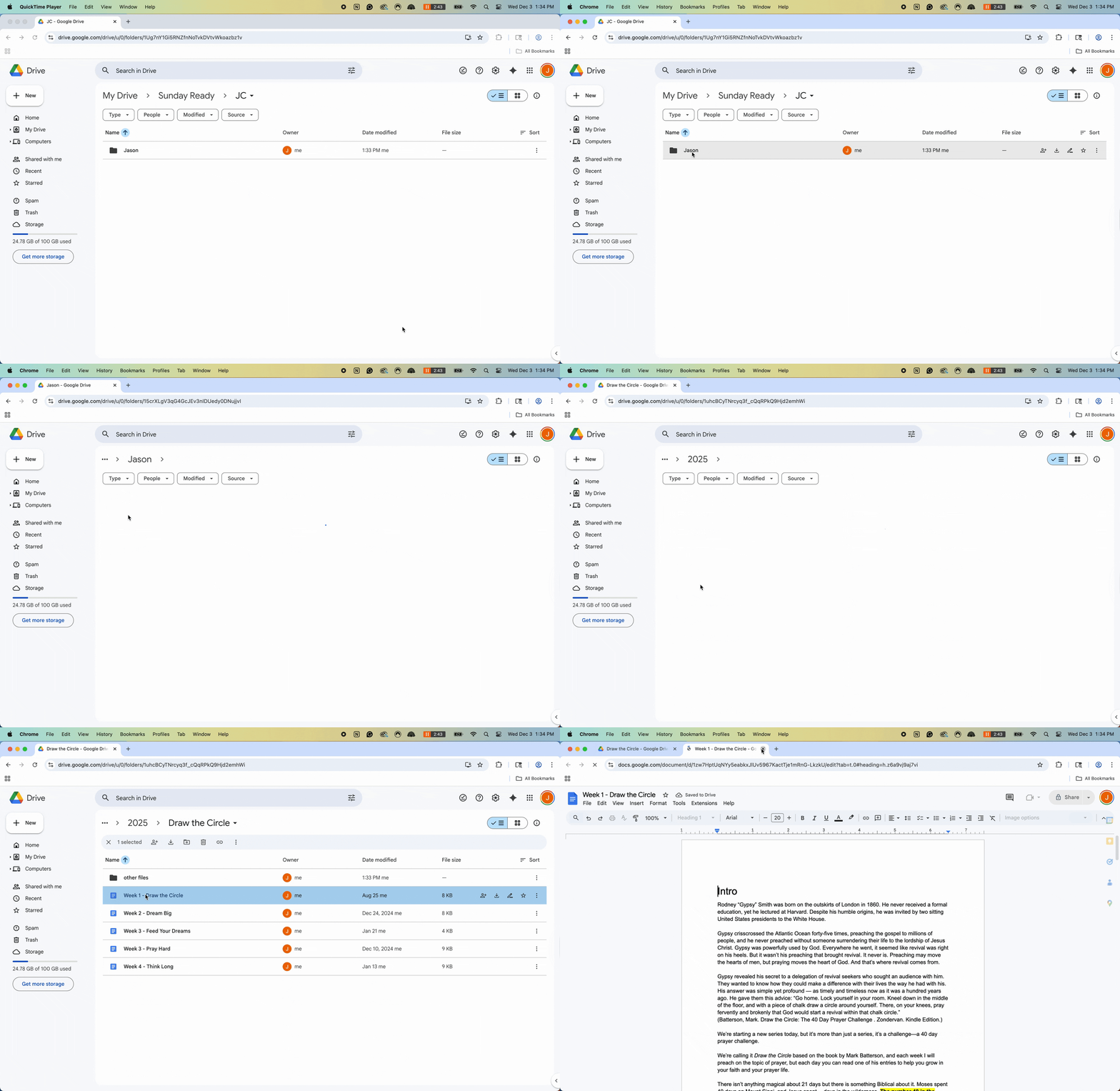
For years now, my “pantry” has been a simple Google Drive setup I use for every sermon and every client. It’s not fancy—it’s just consistent, and consistency wins. Here’s a quick look.
One of my favorite practices is ordering books months in advance on the topics I plan to preach. Giving myself that much runway removes the pressure of last-minute reading. I don’t force it—I just read when I read, underline what matters, scribble in the margins, and shelve it. Then, when it’s time to preach, I pull the book off the shelf, and everything I need is already marked.
Imagine having too much material for a sermon and needing to cut it down. That’s the power of planning ahead.
3. A preaching calendar helps your team get ahead
When you have a good idea of what your preaching year looks like in advance, it allows your creative team (or volunteers) to get ahead on their work. It also allows anyone else who is speaking to get ahead in their planning. (No more telling the youth pastor he’s speaking in 8 days.)
One of the big benefits we’ve seen at Sunday Ready is how a preaching calendar helps senior pastors think strategically about who should preach what. Instead of handing off a random standalone message, the one weekend you’re out of town, you can actually team-teach your series. You assign the topic or text with plenty of lead time, and they can prepare a message that fits the series’s broader direction.
We don’t mean to, but we often send the subtle message that when the senior pastor isn’t preaching, it’s not as important. It’s not on purpose; it’s just that anytime someone else speaks, it’s usually a standalone message, so it naturally feels disconnected. A preaching calendar changes that.
Let’s use this example. You decide to do a 6-week series through a book of the Bible. Using a preaching calendar, you can:
- Decide what six themes/topics you want to cover
- Decide which weeks you will preach
- Decide who will be speaking when you’re not
- Assign them their text and topic
Now your team has weeks—or even months—to prepare. Their message will feel connected to yours. The series keeps its momentum. And your absence becomes far less noticeable because the congregation can sense the unity and continuity of the teaching.
I could give you more reasons, a preaching calendar is a good idea. Reasons like:
- Stronger teamwork with worship, communications, and small groups
- Family calendar management (your spouse and kids will thank you)
- Better preaching
But I think I’ve already convinced you. There’s still one significant challenge that comes up, though, when I talk to pastors about using a preaching calendar (especially for all of my charismatic preacher friends)
What if I change my mind? I don’t want to feel boxed in.
First: if you ever need to change your preaching plan at the last minute, you can. That’s what you’re doing now anyway. The calendar isn’t the Holy Spirit. If you feel led to change direction, change it. No guilt.
Second: there’s a middle ground that’s far more realistic for most pastors. If you already have a series or theme planned, you can easily change the specific sermon topic the week of and still keep the bigger creative framework intact.
For example, let’s say you’re in a series on prayer, and this week you planned to preach on “Asking God for Daily Needs” from Matthew 7. But as you’re preparing, you strongly feel led to preach on “Praying in the Spirit” from Ephesians 6. Guess what? You can make that change seamlessly. You’re still in the theme of prayer. No one has to scramble. Nobody gets hurt.
Third: think of your preaching calendar as a tool, not a cage. For your first year, maybe you keep the topics and themes really broad—that’s perfectly fine. Or maybe you map out 4 big series with lots of detail, but leave 8 or 10 other weeks marked as “Pastor’s Choice—Led by the Spirit.” That works too.
What matters most is simply taking steps to get more ahead of schedule than you are now. When you do, you’ll feel less stressed, your family will feel the difference, and your team will have the margin they need to do their best work.
What Are Your Preaching Priorities?
Whenever I help pastors plan ahead, I always like to talk about their preaching priorities.
Every pastor has a unique voice—a blend of passion, gifting, experience, and calling. It’s why certain messages feel effortless while others feel forced. When your preaching aligns with your authentic voice, you communicate with a conviction and energy your people can feel. (I wrote more about finding your preaching voice in this article.)
Here’s the principle I want you to remember: energy comes from authenticity.
That’s why establishing preaching priorities for the next year is so important. They help you identify your anchor series—the 2 or 3 series you want to emphasize when your church is most present and most receptive.
Look at the list below and select ONLY THREE preaching priorities for the upcoming year. Limitation is a gift here. It forces clarity. It forces you to identify the themes that most align with your voice and the spiritual direction you sense God leading your church.
As you choose, ask yourself:
- Which themes give me the most energy?
- What does my church need most from me this year?
- Where do I feel the Holy Spirit prompting me to lead the church?
There are no wrong answers. There are simply priorities. Choosing three doesn’t mean you won’t teach others—it just means these will guide your anchor series.
Preaching Priorities in alphabetical order (choose only 3):
Apologetics / Cultural Confidence
(Defending faith in a skeptical culture)
Bible Literacy / Biblical Depth
(Understanding Scripture and living it out)
Church Culture / Vision & Identity
(Communicating values, mission, and who your church is becoming)
Discipleship / Spiritual Maturity
(Teaching growth, obedience, and everyday discipleship)
Faith / Encouragement & Hope
(Building expectation & spiritual momentum)
Generosity / Stewardship
(Money, giving, and heart transformation)
Emotional & Mental Health
(Anxiety, relationships, wholeness, healing)
Mission / Evangelism & Outreach
(Reaching the lost, loving the community, and sending out)
Pastoral Health & Sustainability
(This is about planning your preaching around your own energy and longevity)
Salvation / Baptism Emphasis
(Lost people getting saved and baptized)
Community / Small Groups & Belonging
(Friendship, serving, and spiritual family)
Spiritual Practices / Formation
(Prayer, fasting, Sabbath, spiritual rhythms)
I know, I know… they are all important. Trust me, you will preach on more than 3 topics next year. What I’m trying to get you to do, is lean into the promptings of the Holy Spirit, and decide what you think is the priority for the next 12 months. Let’s build our preaching calendar around those themes.
16 Questions to Answer Before You Plan Your Preaching Calendar
So hopefully you’re ready to take the leap and use a preaching calendar. If you haven’t downloaded the free preaching calendar, do that now, because I want to help you use it. You can download the premium preaching calendar ($29) here with some extra resources to help you take your planning even further.
To get started, let’s answer some questions to help us be more strategic in our planning. I’ve provided 16 questions based on trends, pastoral health/energy, and church rhythms.
If you have any staff or volunteers who help you with your church calendar, you can send them these questions to help be strategic in other areas of the church, not just preaching.
Question #1. What were your monthly attendance averages for the past 12 months?
Hopefully you’re tracking attendance consistently. If so, pull up your records and write down the average attendance for each month. For example:
- January — 174
- February — 152
- …and so on.
Why does this matter? Because knowing your attendance rhythms helps you align your most important content with your highest-impact seasons. It also helps you choose the smartest times to schedule speaking breaks—if you’re fortunate enough to get any.
If you’ve never thought strategically about this, it can feel strange to “rank” weekends. You might wonder, “isn’t every Sunday important?” Absolutely. Every Sunday matters—but not every Sunday is equal.
Question #2. What were your attendance totals on the following specific weekends this year?
- Daylight Savings Time (Spring Forward)
- Memorial Day
- Independence Day
- Labor Day
- Daylight Savings Time (Fall Back)
Just like the previous question, these numbers help you plan more effectively around holiday weekends and rhythm-disrupting Sundays. You’re not measuring importance—you’re measuring patterns. And once again, every Sunday is important, but not every Sunday is equally attended.
Question #3. How many weekends did you preach in the last year?
If you don’t currently track this, find a way to go back and count. Look at your podcast feed or YouTube channel. If you don’t have those, you can go back and look at your sermon notes. Come up with the total number of weekends you preached at your church this year. This number will be important for the next two questions.
Question #4. How many consecutive weeks can you preach before you begin to feel creatively tired or in need of a break?
I know this question can be disheartening if you aren’t able to take any preaching breaks, but I want you to answer it anyway. It’s valuable information for you to know, even privately. And if you can take occasional weekends off, this answer becomes one of the most strategic parts of your preaching calendar. It helps you schedule series, breaks, and guest speakers in a way that keeps you fresh and effective as often as possible.
Question #5. Do you have a preference for how many weekends you want to preach in 2026?
Again, this is definitely a privileged question. I fully understand most pastors don’t have the luxury of choosing not to preach. I’ll write more about this topic another time. But even if you can’t imagine taking any Sundays off next year, answer this question honestly. It’s good for your soul to acknowledge your ideal and to dream about what might be possible down the road.
Question #6. Do you (as the senior pastor) typically take an extended break in the summer? If so, when will you be gone?
More and more pastors are finding ways to build in consecutive weekends off during the summer. Again, it’s a privilege—not everyone, probably most, can’t do it. But if you’re fortunate enough to have a summer break, go ahead and figure out those dates now. It will dramatically simplify the rest of your planning.
Question #7. Does your church emphasize 21 Days of Prayer/Fasting in January?
This one’s simple—just answer yes or no. If yes, mark it on your preaching calendar so you can plan your January series around it. If no, move on to the next question.
Question #8. Do you do an “At the Movies” series (or something similar)? If so, when does that typically take place?
Another yes-or-no question. If your church does At the Movies, note the dates on your calendar so you can plan around it.
And by the way—if your church is one of the ones that does an At the Movies series, we give away A LOT of sermon scripts for free each summer. If you want those, make sure you’re signed up for our weekly Monday email.
Question #9. Do you typically do (or plan to do) a church-wide small-group campaign or book-based series in 2026?
Some churches take a few weeks where the entire church studies the same book or curriculum together. If that’s something you do, or want to do, just make a note of when it would typically happen. This helps you plan series length, content flow, and energy cycles around a season that naturally requires more coordination.
Question #10. Do you take an end-of-year offering (Legacy, Kingdom Builders, Heart for the House, Christmas Offering)? If so, what date will that be?
Many churches plan a special giving emphasis in November or December. If that’s you, identify the date(s) now so you can build a series or teaching arc that supports it.
Question #11. Do you typically have a “Vision Weekend” or “Vision Sunday” where you cast or forecast future vision?
If yes, make note of it on your preaching calendar. If not, move on to the next question.
Question #12. Will you host any conferences or VBS next year?
Do you put on a marriage conference, men’s conference, women’s conference, student event, or Vacation Bible School? These events take energy, and knowing when they happen helps you plan your preaching load around them.
Question #13. Will your church have a Student Takeover Weekend in 2026?
A growing number of churches highlight next-gen ministries by letting students lead a full Sunday service. If you already have a date set, write it down. If not, this might be a great opportunity to give your students a platform and give yourself a Sunday off from preaching.
Question #14. Does your church typically do a special “Pastor Appreciation Sunday” with a guest speaker?
This can get awkward if you’re always surprised by it. If your church honors you on a specific weekend with a guest communicator, add it to your calendar.
Question #15. Does your church celebrate an anniversary weekend (church launch date, pastor tenure, etc.)?
Many churches highlight their anniversary in a special way. If you do any kind of milestone celebration, mark it down so you can plan your series length and preaching rhythm accordingly.
Question #16. Do you (senior pastor) typically speak on Mother’s Day?
Some pastors preach, some invite a spouse or special guest. Whatever your rhythm is, note it on your calendar. Mother’s Day is typically a high-attendance Sunday, so it’s worth planning intentionally.
Biggest Mistakes Pastors Make with their Preaching Calendar
We’re going to go step-by-step in the next section and put together a full 12-month preaching calendar, but before we do, I want to point out a few common mistakes I see pastors make when planning (especially if this is your first time).
Mistake #1: Planning too much content
If you’ve never strategically thought about a year’s worth of sermons, it can feel overwhelming. You have 40–50 opportunities to shape the culture of your church and the spiritual formation of your people. That’s a big responsibility—and because of that, a lot of pastors try to cram too much in.
When you start thinking of everything you want to teach and emphasize—every topic, every book of the Bible, every theme—you might feel pressure to cover it all. It comes from a good place. Most pastors are visionaries, teachers, and dreamers. We want to preach everything, but a preaching calendar forces you to prioritize what’s most effective at the right times. If everything is important, nothing feels important.
A better approach is to give yourself permission to preach fewer topics, but preach the topics you choose for longer. So many pastors tell me, “I don’t like preaching a series longer than four weeks. The people get bored. The material gets dry.” I understand the concern, but I also want to challenge the assumption.
I think four-week series often feel comfortable because we’re winging it and can’t come up with more than four great weeks of content on a topic. But if you had more time to plan, study, brainstorm, and collect material, I believe you could preach six–eight weeks with depth and strength. And honestly? I believe it takes that long for your people to truly internalize what you’re trying to communicate.
When you’re writing week to week, 40–50 sermons sounds like a lot. But I’ve seen it happen over and over again—when you plan those 40–50 sermons strategically, you actually start to feel like you don’t have enough weekends to say everything God’s put in your heart. And that’s a good tension. It means you’re preaching with intentionality instead of urgency.
Mistake #2: Ignoring Breaks
Another mistake pastors make is filling every single Sunday of the year without considering the natural rhythms of rest.
Like I’ve already said several times, I understand that it’s a privilege for many pastors to even think about taking time off. Many churches don’t have staff, let alone a teaching team. Some feel pressure to preach because “that’s what we pay you for.” I get it. I’ve lived it.
But I will not back down from my conviction: however you have to do it—trade pulpits, invite a missionary, bring in a trusted friend, elevate someone on your team—you must take a few weeks off from preaching every year for the good of your body, your soul, and the good of your church.
Rest isn’t a lack of faith. It’s an act of faith. And a preaching calendar that includes intentional rest is a preaching calendar built to last.
Let me give you a few reasons why breaks are good for everyone.
First, your body needs physical rest. Preaching every Sunday—even if you love it—is physically and emotionally demanding. It wears on your voice, and it drains your creativity. You are not a preaching machine. You’re a shepherd.
Second, break weeks create opportunities for developing leaders. When you hand someone else the pulpit, you’re not losing a Sunday. Guest speakers, staff pastors, elders, and young communicators can grow tremendously when given a chance to preach. That’s what someone did for you.
Finally, break weeks help your congregation appreciate your voice more. When people hear you every single week, they subconsciously begin to take you for granted. But a small break creates space for gratitude. When you return it actually strengthens your authority and connection.
When we create your preaching calendar in the next section, we’re going to build in intentional weeks off. Your soul, your family, your creativity, and your church will thank you.
Mistake #3: Planning in Too Much Detail
A preaching calendar is a tool—not a cage. One of the biggest mistakes pastors make is planning so tightly, so far in advance, that there’s no room for any change of direction.
Margin is where miracles happen. If your preaching calendar is so detailed that one small change feels like a crisis, that’s a sign you’re leaning too much on structure and not enough on Spirit. Leave space for God to give you a burden. Leave room for a prophetic moment. Build margin for cultural issues that arise. Here’s the secret: The more prepared you are, the easier it is to pivot.
When you create your calendar, plan your series, themes, and general direction, but don’t lock everything in. For example:
- You may know you want to preach on relationships in February, but you don’t need the series title yet.
- You may feel called to preach through a book of the Bible at some point, but you don’t need to decide which one today. You can write, “Book of the Bible (6–8 weeks),” and fill in the details later.
- You may know November will be about gratitude or generosity, but the exact weekly flow can come after prayer and study.
This approach keeps your calendar structured without becoming suffocating. It gives God room to speak in real time. And often, as you’re reading Scripture for your personal devotion, the Holy Spirit will highlight exactly the book or theme you’re supposed to preach.
Now, let me give you one more mistake pastors make…
Mistake #4: Not Enough Variety of Voice and Topics
We talked about your preaching voice in the “preaching priorities” section earlier, but I’m a big believer that every pastor has a voice (I wrote more about finding your preaching voice in this article). It’s a unique way of thinking about and communicating Scripture. Your voice shapes the tone of your church. It influences the kinds of sermons you preach, and ultimately the way your congregation understands spiritual life.
One of the healthiest things you can do as a pastor is identify your voice and play to your strengths. If you’re a Bible teacher, spend most of your time teaching the Bible. If you’re a motivator, spend most of your time igniting faith. But make sure your church gets some variety.
Variety can come in two forms:
1. You preaching differently than your default style
2. Other communicators preaching from their distinct voice
For example, if you tend to preach “felt-need” messages (anxiety, relationships, purpose, hope, etc.) stretch yourself. Teach a six-week series through a book of the Bible. And don’t turn every passage into another felt-need sermon. Let the text lead. Teach doctrine. Teach theology. Help your people wrestle with Scripture on its own terms. It may stretch you, but stretching is healthy for you and for your church.
Likewise, if you’re primarily an expository preacher, consider preaching a short, practical series on marriage or identity or spiritual habits.
To help you think about variety, here’s a simple template I like to use as a general planning rule. You can adjust it depending on your voice and your church context, but it’s a great starting point:
- 2 in-depth series through a book of the Bible
- 2 felt-need series (pain, hope, anxiety, identity, etc.)
- 1 relationship or family series (marriage, parenting, dating, etc.)
- 1 series on giving or money
- 4–6 weeks of guest or staff speakers (if you’re able)
Depending on the length of your series, that covers 32–35 weekends, and leaves 17–20 weekends open for vision sermons, holidays, missions emphasis, spontaneous directions, or anything else God puts in your heart.
Variety gives your people a balanced spiritual diet and keeps your preaching fresh rather than predictable.
A Step by Step Guide to Build Your Preaching Calendar
So we’ve covered alot, but now let’s actually create your preaching calendar. If you haven’t downloaded your free preaching calendar yet, you can download it here, or you can purchase the premium preaching calendar ($29) here.
Once you have your calendar downloaded open it up in whatever program you’re using, and let’ get to building.
To create your preaching calendar we’re going to follow a simple plan.
Step #1: Start with holidays
Before you plan a single sermon series, you need to anchor your year with the major holidays and events that affect Sundays. These dates shape attendance patterns, energy levels, and the emotional rhythm of your church.
Here are 10 key holidays or events that effect Sundays:
- Easter
- Christmas
- Independence Day weekend
- Daylight Savings Time (both “good” and “bad” weekends)
- Mother’s Day
- Father’s Day
- Super Bowl Sunday
- Memorial Day weekend
- Labor Day weekend
- Spring Break (varies by region)
Some of these weekends will increase your attendance, others will decrease attendance, and some will affect the energy in the room. What matters most is that you know when they are happening and plan strategically around them.
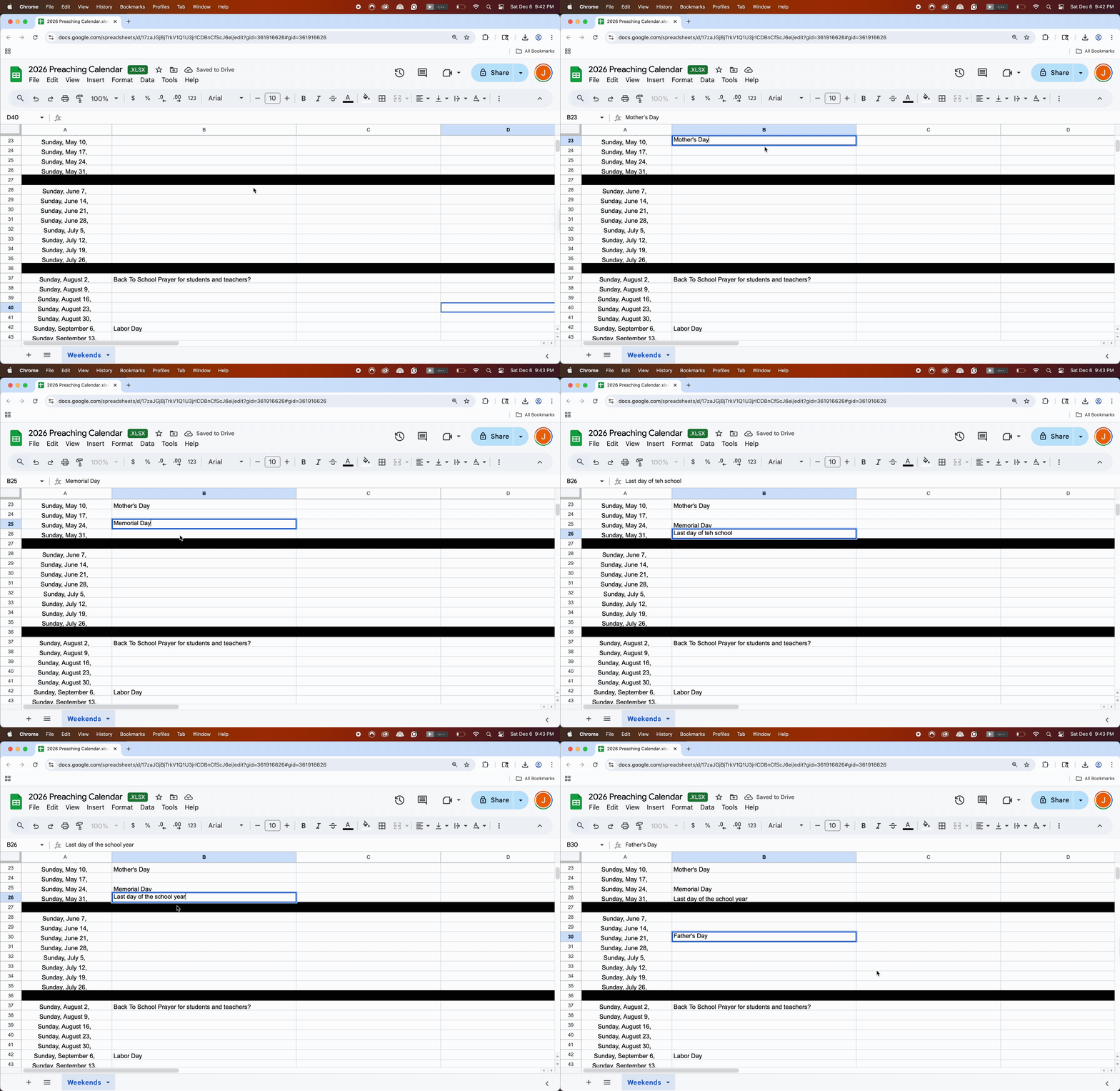
Step #2: Schedule your church/life rythyms
Once you’ve plugged holidays into your calendar, the next step is to layer in the natural rhythms of your church and your personal life.
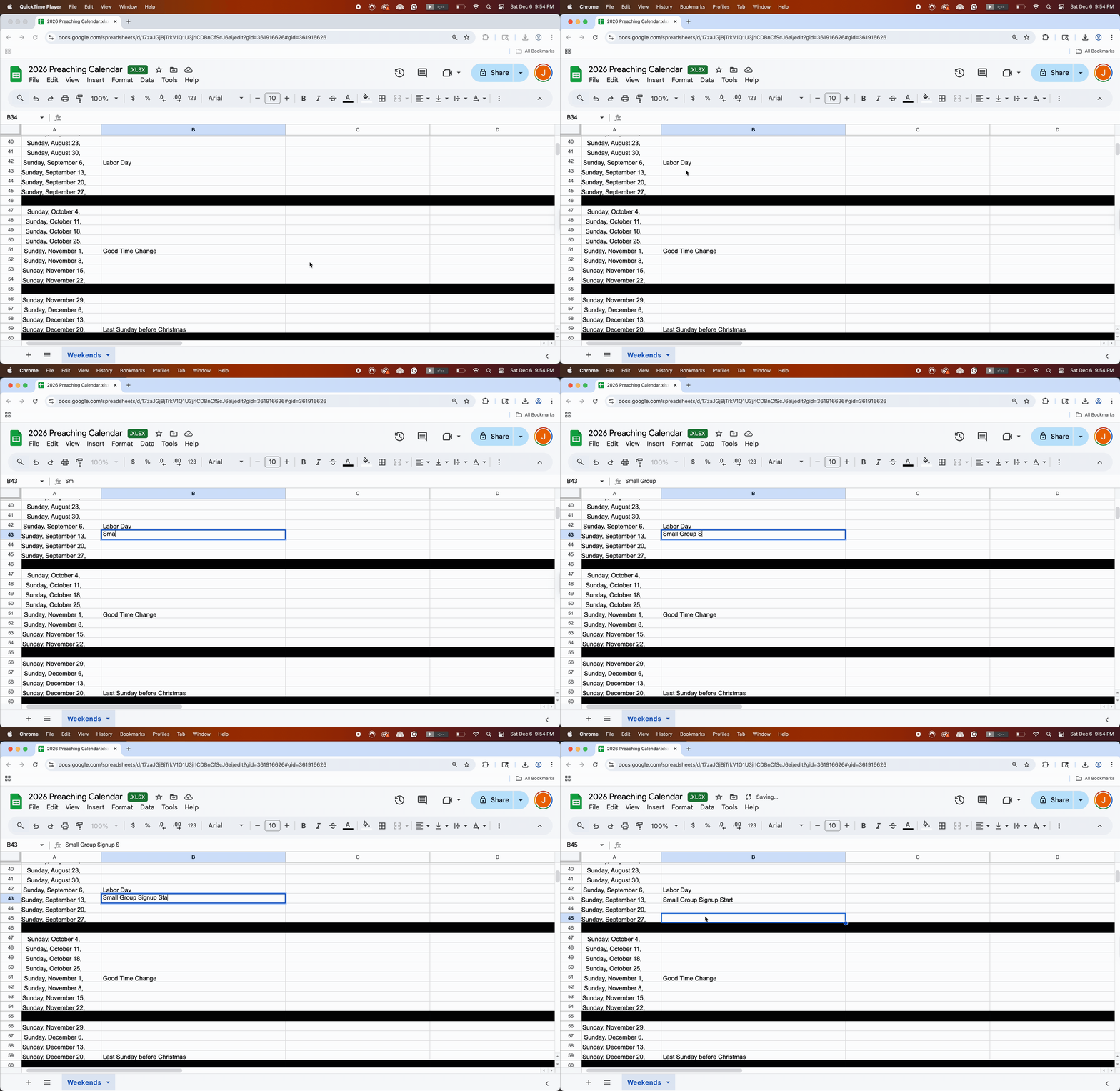
- When do small group sign ups happen through the year?
- Do you make a volunteer push anytime during the year? (This includes conferences, VBS, and anything else that is a recurring event in your church. )
- Also consider when the school calendar begins and ends for your school district. Family rhythms and church rhythms change when school is in or out.
Whatever it is, add it to the calendar in the “notes/important dates” column so you can plan your sermons accordingly.
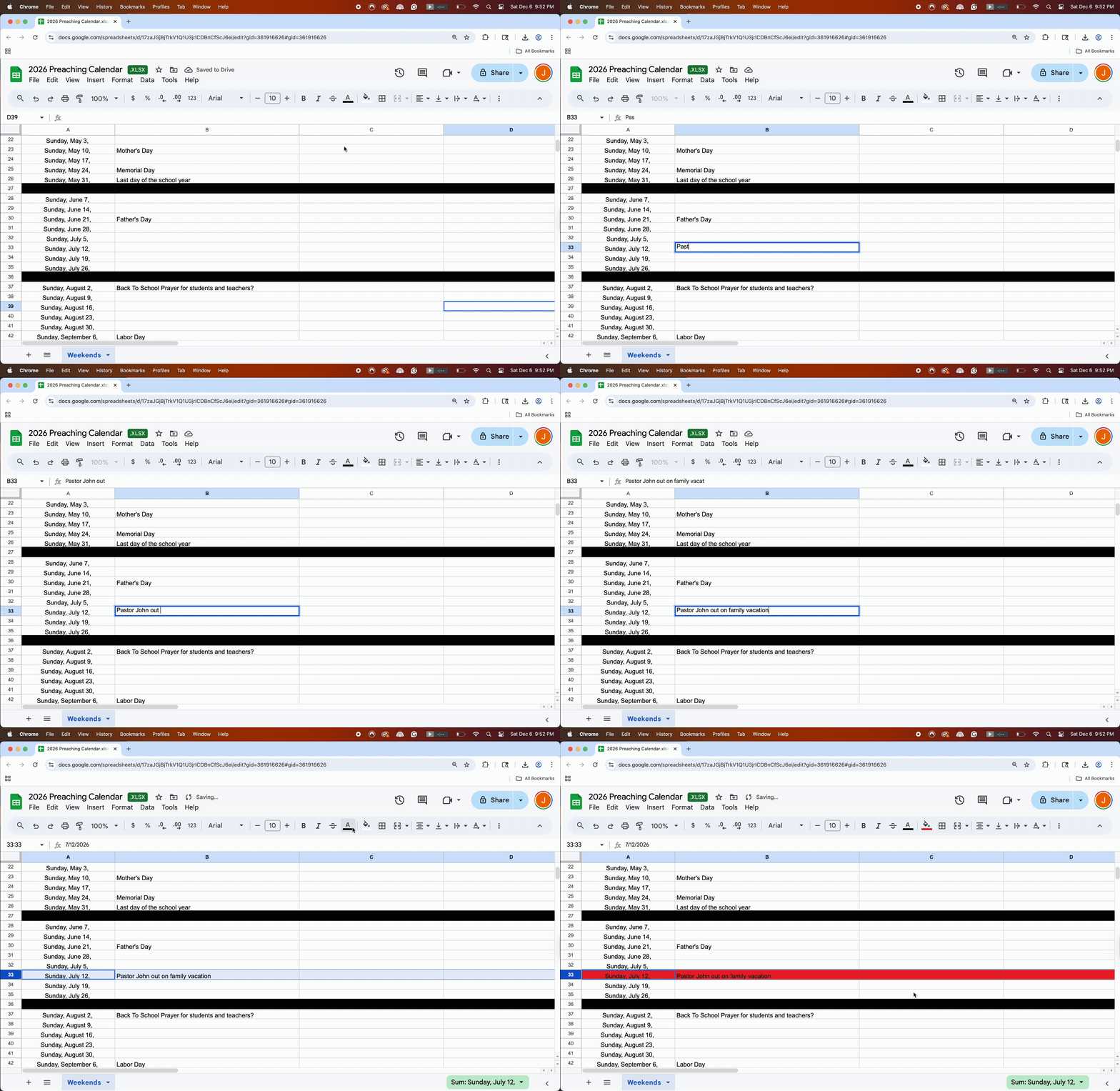
Step #3: Schedule your family vacation
I know I’m bringing it up a lot, but I’m passionate about this topic. Before you plan a single series, schedule your family vacation. Even if, at the very least, you only take one Sunday off next year, schedule it now. Don’t wait until “things slow down.” Put it on the calendar now.
And here’s something I feel very strongly about: don’t plan your vacation Monday–Saturday. I grew up in a pastor’s home, and I pastored for 20 years. I know all about the infamous six-day vacations so you don’t miss church. Don’t do that to your kids. Schedule a full week away where you miss a service, disconnect, and actually breathe.
Bonus Tip: Call your spouse and say, “I’m working on planning next year’s sermons, and before I do anything else, I want to make sure we schedule time away for our family. When do we want to take a family vacation?”
You can thank me later. 😉
Step #4: Schedule any other breaks
Based on the answers to the questions earlier, now is the time to schedule your weekends off. This will be different for every pastor, but based on how many weekends you want to preach, your churches expectations, and attendance trends (when alot of your church is away themeselves.) Go ahead and schedule your breaks.
There is no one size fits all for this, but in general, I always recommend a pastor taking preaching weekends off on Labor day and Memorial day at a minimum if you can.
Step #5: Schedule your 2 most important series
Now we’re getting to the fun stuff. Up to this point we’ve been laying the foundation—holidays, rhythms, rest, and breaks. But now we get to start shaping the heart of your year. Step #5 is where you schedule your two most important, most impactful sermon series of the entire year.
I determine these series based on two simple questions:
1. What is on your heart to emphasize to your church?
GO back and look at the themes you selected in the “preaching priorities” section. These are the themes or spiritual areas you feel deeply burdened for? Something you want to see grow in your people more than anything else?
You can use this sentence as a guide: “If my church only grew in ONE area next year, I want us to grow in ______.”
Your answer might be generosity, evangelism, Bible literacy, emotional health, spiritual habits, prayer, unity, or something else. Just write down what’s on your heart.
2. When is the peak attendance season in your church?
Now go back to the question #1, where you listed your monthly attendance averages. Look at those numbers and ask: “When is the highest number of my congregation present at the same time?”
Those weeks are gold. Those are the weeks when you want your strongest, most important messages on display.
Let me give you an example from a church I helped recently. These were their monthly averages:
Dec. 24 – 248
Jan. 25 – 237
Feb. 25 – 231
Mar. 25 – 226
Apr. 25 – 296
May 25 – 227
June 25 – 213
July 25 – 218
Aug. 25 – 255
Sept. 25 – 251
Oct. 25 – 225
Nov. 25 – 249
Based on these numbers, their peak attendance season is August/September, and their lowest attended season is June/July. The difference was only 38 people, but that still represents around 13–15% of their total Sunday attendance.
Their second-highest attendance rhythm was November/December. So for this church, the fall season is the most strategic time of the year. That’s when the pastor should preach his most important series.
Now look at your own numbers. Based on data, or just your gut, identify your two most important emphases for next year and decide when you want to preach them. These two series will anchor your year and give your preaching calendar clarity and direction.
Step #6: Schedule 4 more series
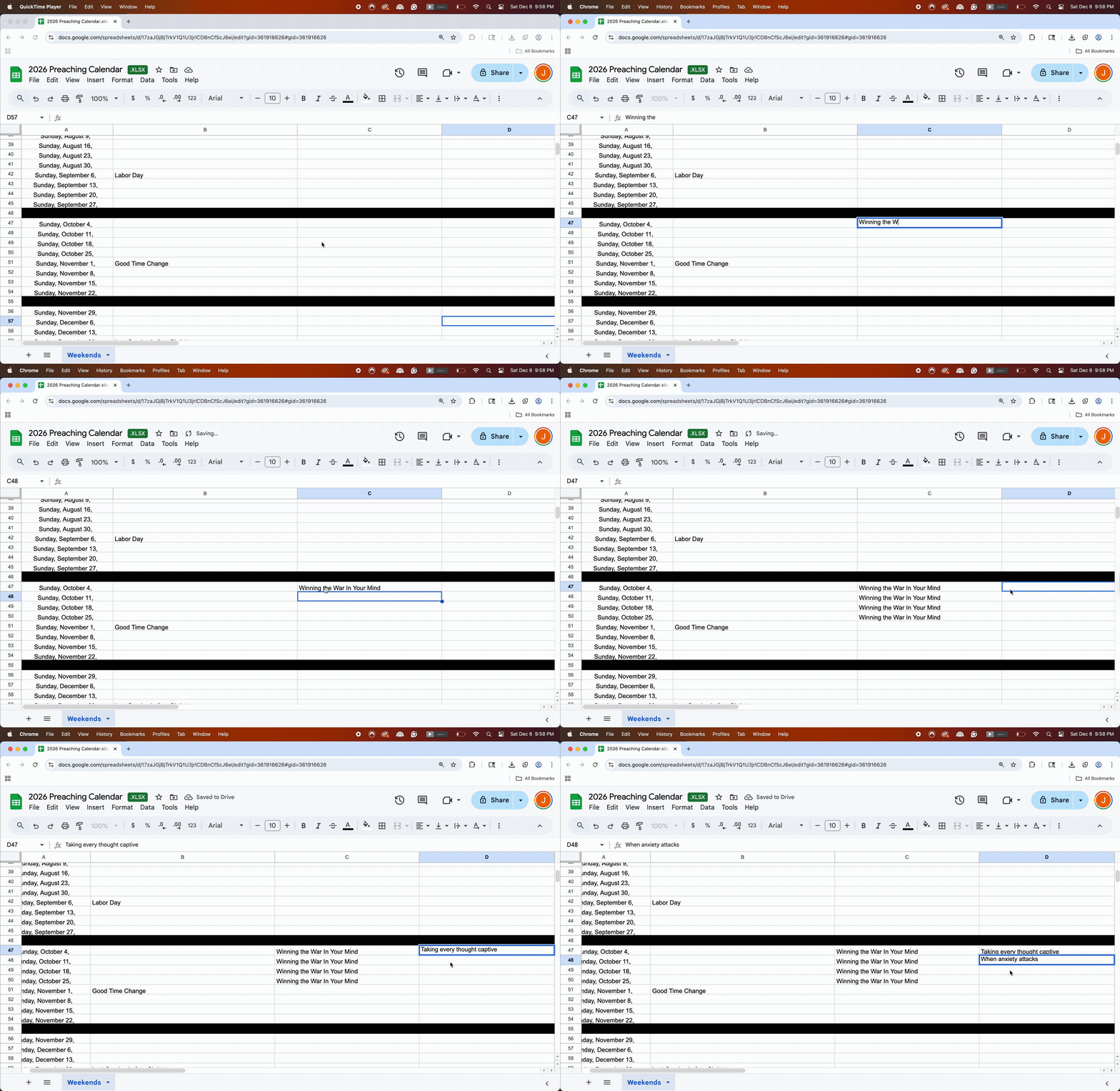
Now that you’ve identified your two most important series for the year, it’s time to fill in the next layer of your preaching calendar: four additional series that help create variety throughout the year.
This step has a lot of personal preference baked into it, so there’s no single “right” way to do it. But the goal is to choose four well-timed series that fit the natural flow of your church year.
Here are a few suggestions to help you think through what to schedule:
1. Plan the series that follows Easter.
Easter is one of the highest-attended Sundays of the year, and the 3–4 weeks after Easter are often your best-attended stretch. If you didn’t already schedule your biggest series in this window (in Step 5), this is a great place for something meaningful.
2. Think about how you want to schedule the summer.
Summer is unpredictable for every church. Some pastors preach one long 8-week summer series. Others break it into shorter 3–4 week segments. Some use the summer for team-teaching, guest speakers, or lighter topics. Your church culture will guide this, but be intentional.
What’s important is to figure out the length of the series so your calendar begins to fill out and take shape.
Step #7: Schedule your standalone/single sermon weeks
Now it’s time to schedule your standalone sermon weeks. These are the weeks that aren’t tied to a series. You may use guest speakers, staff pastors, or simply preach a one-off message yourself. You might even label these: “Pastor’s Choice — Led by the Spirit.” Like we talked about earlier.
It’s important to note: these are not “throwaway” Sundays. Standalone sermons can be deeply strategic and incredibly impactful if you use them intentionally.
Let me give you an example. One pastor we work with has developed a yearly tradition the Sunday before school starts back in his district. Every year, he preaches a one-week message focused on blessing the next generation. Sometimes he preaches about prophesying over your children. Sometimes he preaches directly to the students about being leaders in their schools. Other times he preaches to parents about trusting God with their children’s future. And then they end the service by praying for every student in the room.
It’s one Sunday, but it has become one of the most meaningful weekends in their church calendar, and people now look forward to it.
Standalone Sundays can serve all kinds of purposes:
- Vision updates
- Spiritual emphasis weekends
- Prayer and worship Sundays
- Guest missionaries
- Baptism Sundays
- Seasonal transitions (back-to-school, new year, or post-Easter recovery)
Standalone Sundays give you room to lead prophetically, and help your church build rhythms that matter. They also give you opportunities to rest, delegate, develop leaders, and strengthen your teaching team. Use them wisely.
Step #8: Step back and take inventory
Your calendar is basically finished, but before you fill in the remaining open weeks, take a moment to step back and look at your year as a whole. Ask yourself a few honest questions:
- How does it feel?
- Does it align with your heart?
- Can you see a natural flow or rhythm to it?
- Are you getting any breaks?
- If so, are those breaks at the right time?
You are the shepherd of your church. You know your people. You know your community. You know your own internal rhythms better than anyone else. Trust the Holy Spirit in you. Trust the instincts God has given you. If something feels off, adjust it.
Consider taking a day or two to pray about it. Once you feel peace about what you’ve scheduled so far, you’re ready to move on to the final step.
Step #9: Fill in the blank weekends
At this point, you’ve done the hard work. You’ve marked holidays, scheduled your family vacation and breaks, anchored your two most important series, added four more series, and sprinkled in strategic standalone Sundays. Now all that’s left is to deal with whatever is still blank.
Every pastor does this a little differently. Some pastors like to squeeze in another series or two.
Some prefer to add more guest speakers or staff preachers. Others choose to leave room for “Pastor’s Choice” weekends.
Whatever you do, I only have one rule: don’t leave any weekends blank!
You may change your mind later, and that’s totally fine. You might swap a series, move a guest speaker, or change the topic of a standalone sermon as the year unfolds. But before you call your calendar “finished,” make sure every weekend has something written down.
Once every weekend has a plan (even a rough one), you officially have a preaching calendar for the year.

Conclusion: Congratulations, you’re leading instead of reacting.
Hopefully by now you’ve already downloaded your free preaching calendar or purchased the premium preaching calendar ($29).
Our mission at Sunday Ready is simple: to lighten the burden pastors carry. We know the weight of ministry, and we hope this resource makes that load just a little lighter.
Before we finish, I just want to say something pastors don’t hear enough: I’m proud of you.
I know that may sound strange, but you’ve just done something most pastors never slow down long enough to do. I pastored for 20 years, and I’ve been around pastors my entire life. We are adrenaline junkies. We hate being stressed, rushed, behind, and exhausted, but in some twisted way we also thrive on it. It feels normal.
So for you to sit down, slow down, breathe, think, pray, and plan twelve months ahead? That’s not normal. That’s leadership. That’s maturity. Good job!
Let me make you a promise: If you’re a “feeler” or someone who loves spontaneity and hates structure, you’re going to be tempted to scrap this plan. You’ll say it’s the Holy Spirit, but it’s probably not. Something will come up, a series will feel flat, you’ll get bored, or you’ll get inspired—and every part of you will want to toss the plan and go back to winging it. Don’t do it! Your spouse, your kids, your staff, and your church are silently begging you: stick to the plan.
Like we’ve already talked about, there’s wiggle room and flexibility, built into the calendar. Give this preaching calendar a full year. When you get to the end of the year, I genuinely believe you’ll feel like a more strategic, more prepared, and most importantly healthier.
As always, if there’s anything I can do to help you, send me an email. I’ll do my best to serve you.
And one last thing: I offer a strategic coaching call where I help pastors build their preaching calendar step-by-step. We hop on Zoom for a few hours and walk through everything in this blueprint—but I personalize it to your church and your rhythms. If you want fresh eyes, experience, and someone who has walked dozens of pastors through this process, I’d love to help.
Just send me an email and let me know you’re interested.