Where do great sermon ideas come from? The Bible, yes. Of course. But I mean even before that. Where does the seed of a thought that eventually grows into a sermon start?
Every pastor loves to be inspired. And when you have a great sermon idea, it makes planning and writing the sermon so much easier. That’s why finding, collecting, and organizing those ideas matters so much.
In this article, I want to show you a system I’ve used and tweaked for 20 years to help me find, collect, and retrieve great ideas. Without a system for gathering material, sermon prep always starts at zero—and starting at zero every week is exhausting. One of the best ways to lighten the load of weekly preaching is to build a system that helps you get ahead before you ever sit down to write. (I’ve written about the physical toll of weekly preaching in this article.)
I don’t claim to have the perfect system. But I do have a system that has worked for me for years. I used this approach when I was pastoring and preaching weekly. I still use it today in my work with Sunday Ready and as a ghostwriter. At any given time, I’m usually managing multiple sermon series, a few book projects, and several social media accounts. Staying organized and collecting great ideas is how I survive creatively.
I’ve borrowed several ideas from Ryan Holiday. Here is a video of his system. (he is talking to authors but it’s applicable to pastors, too.)
I should also say this upfront: I am not a naturally organized person.
My desk is usually a mess. I try to keep it clean, but it rarely stays that way. In a lot of ways, my desk looks like my brain. That’s exactly why I need a system outside my head to catch sermon ideas before they disappear.

Below, I’ll walk you through the step-by-step process I use to plan ahead, collect sermon ideas, and prepare sermons without the constant pressure of starting from scratch.
But before we get practical, here’s the most important thing I’ve learned: The best system is the one you’ll actually use.
My system isn’t perfect, but the reason I stick with it is because I’ve proven to myself that I’ll actually use it. There are countless productivity methods out there. I’ve tried many of them, but for some reason or another, they didn’t last. Don’t aim to build the best system. Build one you’ll return to week after week. Consistency beats perfection every time.
With that in mind, here’s how I do it.
Step 1: Read, Read, and Read Some More.
If I were helping you get organized and ahead, the first question I’d ask is: Where do you get your ideas?
In theory, you can find material from videos, podcasts, and social media. I use those too. But I honestly don’t know how someone who doesn’t read consistently finds fresh material over the long haul. Of course, this includes the Bible.

The quote attributed to Mark Twain comes to mind: “The man who does not read has no advantage over the man who cannot read.”
I know you’re busy. Who has time to read? But the average person watches about 20 hours of television a week and spends nearly 5 hours a day on their phone. Maybe that’s not you. But most of us could find time to read. I have the benefit of actually enjoying it, but even if you don’t, I think it’s part of the job. If you want to say something meaningful, you have to take in something meaningful.
I read recently that when James Mattis served as Secretary of Defense, he blocked off an hour every day for “lunch/reading time.” Eugene Peterson did something similar. He literally scheduled reading and thinking into his calendar. He treated them as appointments, not optional extras.
Reading is rarely urgent. No one is emailing you demanding that you read a book today. That’s exactly why it gets pushed aside. But it’s also why it’s so crucial. Reading is one of the places where great sermon ideas come from.
Here’s a simple rule of thumb: Read more than you write.
So that’s step one: Read.
Step 2: Mark Anything Interesting
Always read with a pen. Underline sentences. Circle phrases. Write in the margins. There’s no right or wrong way to do this. Just make notes.
I like to write the topic or project beside what I underline, so when I go through the book later (we’ll get to that in a moment), I know what I want to do with it.
I also write down anything else that comes to mind, whether it has anything to do with what I read or not. If it sparked a thought, I write it in the book. That will be important later.

Step 3: Review Your Notes For Great Sermon Ideas
At some point, after I finish reading the book, I flip through the book page by page and review all of the notes I made.
As I review, I’m trying to refresh my memory and decide if what I found interesting is useful. If the note is still relevant, I make any additional notes I need and then fold down the corner of the page so I know where to find it later.
It’s worth noting that I don’t review my notes as soon as I finish reading the book. Often, I’ll go weeks without blocking off time to review the recent books I’ve read. As long as you’ve made notes while reading, it doesn’t really matter when you review them.

Step 4: Make a Table of Contents
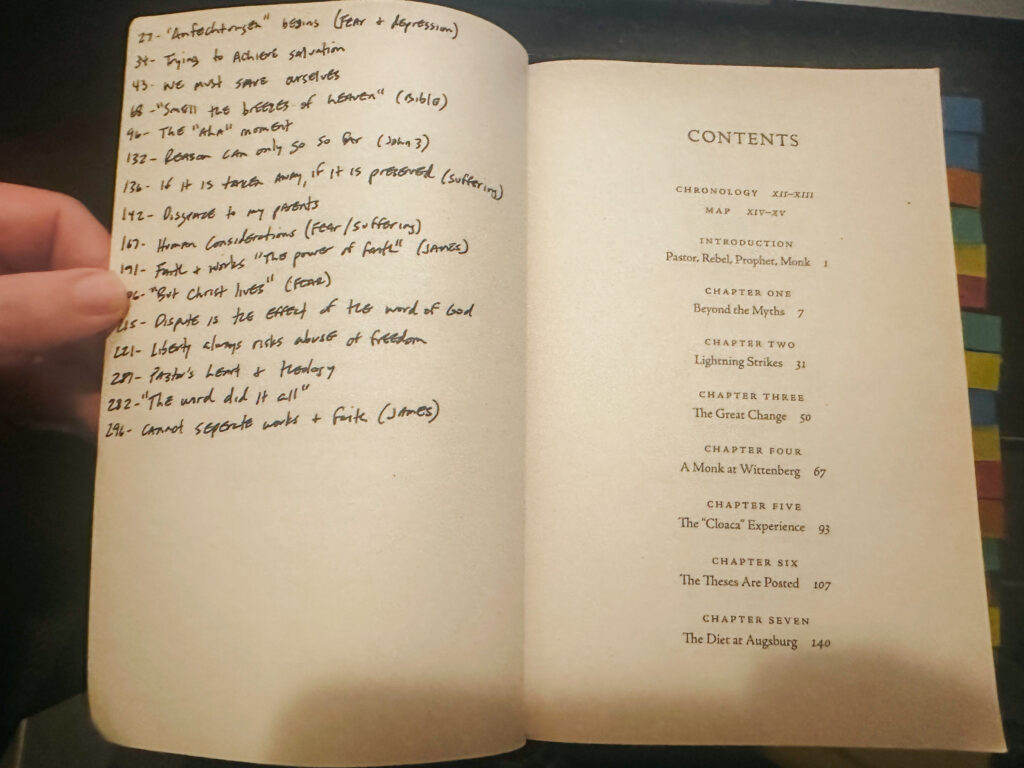
After you have reviewed your notes, find a blank page in the front of the book and write a simple description and page number where you can find it.
It doesn’t seem important now, but in a few years, you’re going to think to yourself, “Where was that story I read about…” You’ll have a few guesses about where it was. When you go searching, having a Table of Contents makes the task of finding it much simpler and faster. It takes a little longer on the front end, but saves a lot of time on the back end. (I also add tabs to the pages, but that’s just a personal preference.)
So if you’re keeping track, I go through each book three times:
First, I read it.
Second, I review my notes.
Third, I catalog what’s worth keeping.
Step 5: Move the Notes Where They Need To Go
This is where a lot of people lose track of their ideas. At some point, you have to move the notes from the book to the place where you want to use them.
As I mentioned earlier, at any given time, I’m usually juggling several sermon series, a few book projects, and multiple social media streams. That only works because I have a very clear file-storage system.
I use Google Drive, and my setup is really simple.
Level 1 is my different businesses.
Level 2 is the projects I’m working on.
Levels 3 and 4 are a breakdown of those projects (series weeks or book chapters).
This is where the magic happens.
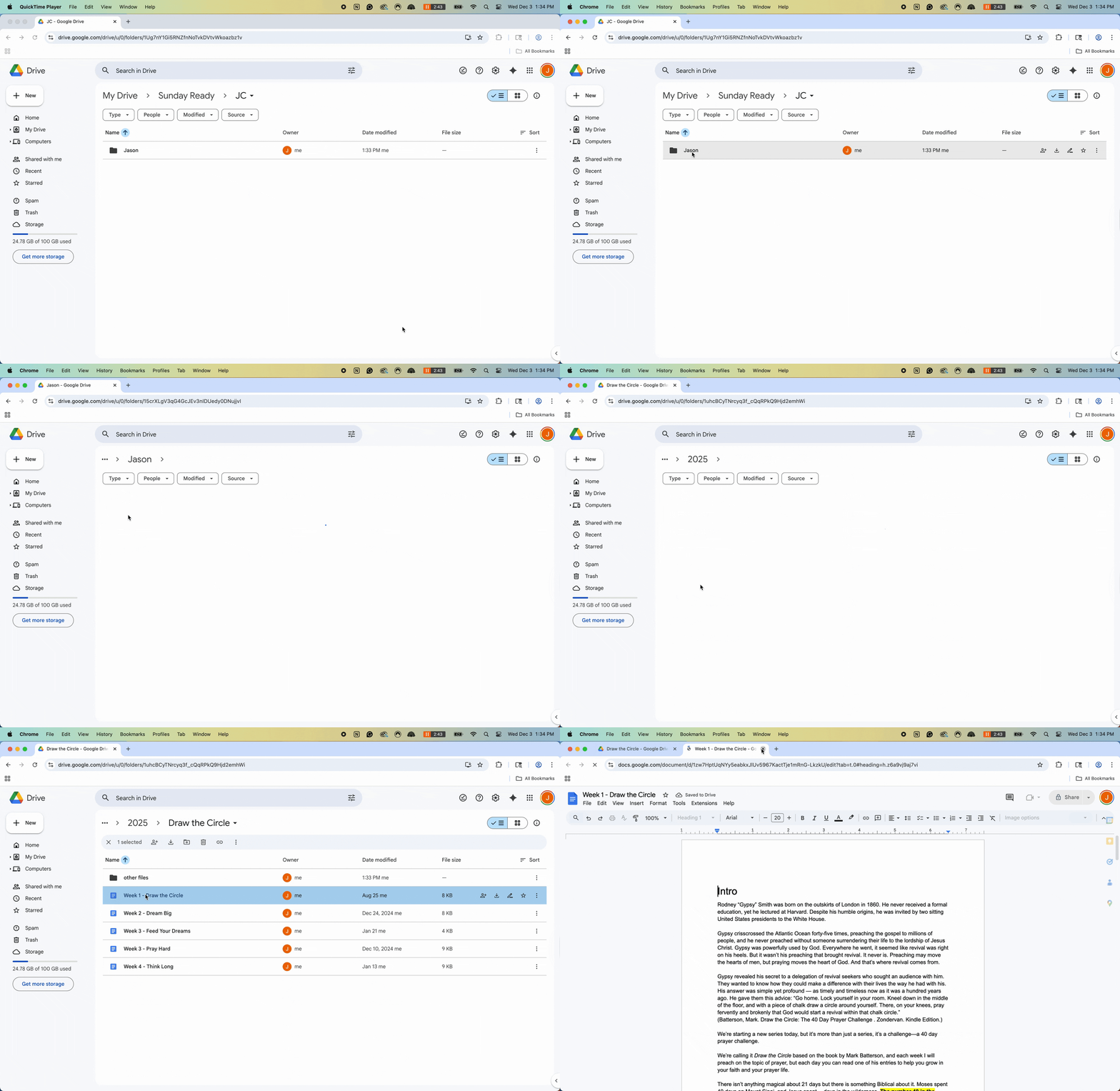
Because I plan ahead, using a preaching calendar and outlining book projects before I begin, I already have folders for future work. That means when I read something interesting, mark it, and review it, the final step is simple: I move that note into the exact project where I’ll eventually use it.
Sometimes I use the note exactly as I found it. If it’s a quote, I’ll paste it in and source it immediately so I won’t have to hunt it down later. Other times, the note just sparks a sermon idea or sends me in a new direction. Either way, it goes where future-me will need it. In this way, I create a sort of time travel machine. I go into the future and leave a note for myself. And then at just the right time, I find it when I need it. This means I am never ever starting from zero.
One important clarification: I do not keep one massive folder or database with all my material. I know many people use apps like Notion or Evernote. I’ve tried that. It never worked for me. My material only exists in the place where I plan to use it. That approach only works, though, because I know what I’m working on now, and what I’ll be working on later. Planning ahead is what makes this possible.
If you don’t know what you’re preaching three months from now, how would you know what to look for? And if you find something helpful, how would you know where to put it? A preaching plan gives your ideas a home. It allows you to collect and then know exactly where each piece belongs when the time comes.
I wrote a lot more on how to create a preaching plan in this article.
So that’s my system for finding, collecting, and using great sermon ideas in books. But what about ideas that don’t come from books? I have a system for that too….
Step 6: Write Down Every Idea
There’s nothing more frustrating than having a great sermon idea, and then losing it because you didn’t capture it in time.
Hemingway is often attributed with saying, “When you have an idea, you must write it down immediately, or it will escape.” He’s right. Ideas disappear.
That’s why I type everything that comes to my mind, and I mean literally everything that crosses my mind that I might want later, into my phone. Sentences for a book. A sermon angle. A domain name. A research question. A half-formed thought that doesn’t make sense yet. All of it goes in Apple Notes.
There are no rules. No categories. No pressure to organize it in the moment. Just get it out of your head and into the note. If I don’t type when I think about it, it’s gone.
Step 7: Review Your Notes and Move Them
Then, every few days or weeks, just like I review my book notes, I review my phone notes. After some time, what I typed may no longer be relevant, so I delete it. If it’s still relevant, I move that note to wherever I need to use it. (Which is usually in that Google Drive folder system I mentioned above)
If it stays in my phone too long, it gets lost because I’m always adding notes, and the scroll keeps getting longer and longer. I try to organize my notes every Friday. Sometimes I do, sometimes I don’t.
But what about something you see on YouTube or social media? I have a system for that too…
Step 8: Bookmark Everything
If you’re like me, you’re scrolling through social media and something jumps out at you—a quote, a story, a stat, or a turn of phrase. You think, “That’s a great sermon idea.” But if you don’t do something with it right then, it’s gone.
So I bookmark it into one of any different bookmark folders I created on the app.
If it’s something I know I’ll use soon, I’ll take a screenshot and either text it to myself or drop it into Apple Notes. What matters most is capturing it immediately. You can always decide what to do with it later, but you can’t recover what you didn’t save.
Conclusion: Any Plan Will Work If You Work the Plan
That’s it. That’s my system for great sermon ideas. It’s not the most elegant or impressive system. But it’s one I actually use over and over again. And because I use it, it works.
This system allowed me to preach 35–40 sermons a year while pastoring, and write 83 sermons last year. I’ve written four books of my own and ghostwritten six more. The writing still takes work, but I’m never starting from zero. I’ve already got some momentum before I begin.
What’s important is that you get in the habit of thinking and planning ahead, and create a system to keep feeding content to your projects. If you do, you will never start from zero and never stare at a blank page. Every sermon idea won’t be a great idea, and you won’t use everything you collect, but you will have somewhere to start.
Even this article started because I read a sentence in a book that said, “don’t start from zero.” Then I thought, “I wonder if pastors would find how I find and collect ideas interesting?” Then I opened up Google Docs and wrote down 10-15 disjointed sentences. 3 weeks later, I came back, opened the document, and typed the article. That’s the power of a writing/research system.

But there’s one more long-term benefit to an organized system like this: over time, it becomes a library.
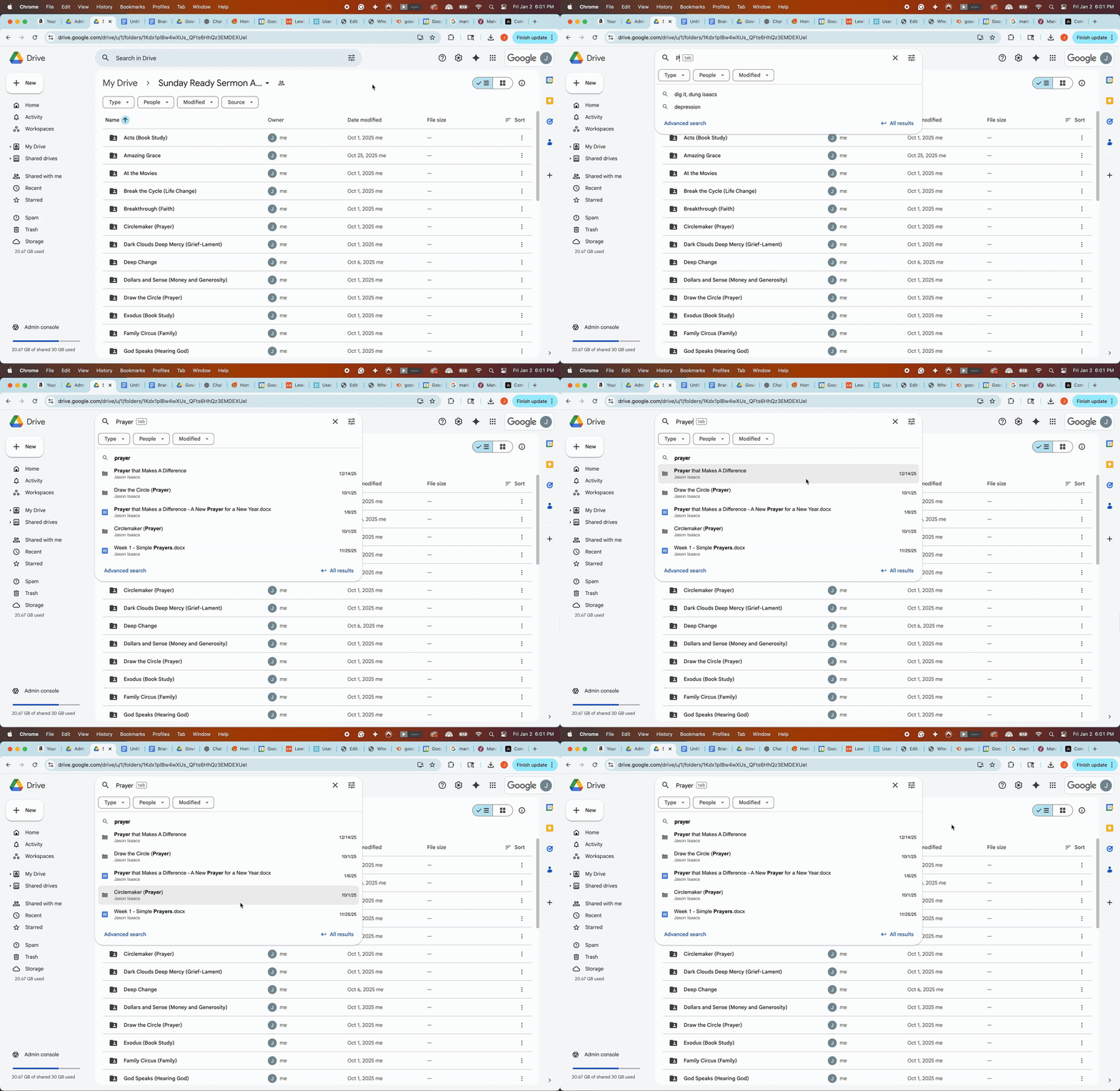
A decade in, I can search my Google Drive and instantly access years of stories, research, and illustrations. It’s the compound effect of consistent collection.
Weekly preaching is already hard. Don’t make it harder by starting from zero every time.
Plan ahead.
Read deeply.
Collect faithfully.
Catalog consistently.
I promise you it will make the burden of weekly preaching easier, and your content will be better.